The 90-day outbound plan we run for founders
What you get out of this
- A named list of 300–500 accounts with a reason to talk to each one.
- Three message angles tested against a real benchmark, not against your own opinion.
- Sending infrastructure that lands in the inbox, with health numbers you check weekly.
- A second and third channel by day 60, because email alone averages a 0.45% reply rate across 7.5 million cold sends.
- One report, every Friday, that tells you whether to keep going or change something.
Why most 90-day plans fail in week 3
Founders usually start outbound the same way: buy a sequencer, buy a list, load 20,000 contacts, press send. Three weeks later the replies are thin, the domain starts landing in spam, and the conclusion is that outbound does not work for this market.
Outbound did not fail. Four things were missing: a real ideal customer profile, an offer that is worth a stranger's 30 minutes, infrastructure that gets the email delivered, and a second channel once the first one gets noisy. This plan fixes them in order, because each one depends on the last.
It is written for seed to Series A founders selling B2B software or services with roughly $5,000–$60,000 annual contract values, into the U.S., India, the UAE or Australia. If your deal size is under $2,000, outbound is usually the wrong motion and you should be in product-led growth instead.

Days 1–14: ICP and a list you would actually call
Skip the firmographic lecture. You need 300–500 named accounts and one sentence explaining why each of them is on the list today.
- Fit: industry, company size band, geography, and the two tools or triggers that tell you they can buy. Keep it to four filters. Five filters is how you end up with 40 accounts.
- Trigger: they just raised, they are hiring SDRs or a VP Sales, they opened a new region, they dropped a competitor, they posted about the problem you solve. A trigger is what turns a cold email into a timely one.
- Person: two to four contacts per account, usually one leader and one practitioner. One contact per account means one bad email kills the account forever.
Company size matters more than people expect. In Belkins' 2026 study of 7.5 million cold emails sent through client campaigns, companies with 11–50 employees replied at 0.49%, while enterprises with 10,000+ employees replied at 0.22% — less than half. If you are a small team doing outbound for the first time, the mid-market will almost always beat the enterprise on reply rate for the same effort. That does not mean you abandon enterprise; it means you staff it with a different motion (partners, events, warm introductions) rather than cold volume.
Deliverable at day 14: a sheet or CRM view with 300–500 accounts, the trigger written in a column, and verified email addresses with a bounce check already run.
Days 15–30: one problem, one offer, three messages
Most cold email fails because it asks for too much. The only ask that works at day 30 is a short conversation with a concrete reason to have it now.
If your email needs a paragraph of context before it makes sense, it is a newsletter, not outbound.
Write three angles, not thirty. Same offer, different reason to care:
- Problem angle — name the operational problem and the cost of it.
- Trigger angle — reference the event that made this timely.
- Peer angle — what a similar company did and what changed.
Personalisation is not writing "I saw you went to Stanford". In the same Belkins dataset, campaigns that personalised the subject line converted to a reply at 7% against 3% without personalisation — but the personalisation that moved the number was about the prospect's situation, not the sender's research hobby. One line of genuine relevance beats four lines of flattery.
Keep subject lines to two to four words and write them like a human, because hype words, "ASAP" and generic greetings all pushed engagement below 36% in Belkins' subject-line study. Send the three variants to three equal slices of your list for two weeks each. Kill the loser, double the winner.
Days 31–60: infrastructure and the first sequences
This is where most DIY efforts quietly die. Sending from your primary domain with no SPF, DKIM or DMARC alignment, at 500 emails a day, burns the domain you use for billing and support.
- Domains: two to three secondary domains that look like your brand, pointing at the same site. Never your root domain.
- Authentication: SPF, DKIM and DMARC set and verified before the first send. DMARC at least at
p=nonewith reporting so you can see what is happening. - Ramp: 20–30 emails per mailbox per day in week one, 40–50 by week three. Volume is the reward for good health, not the starting point.
- Sequence: five to six touches over 14–21 days: two emails, a LinkedIn view or connect, one more email, then the call.
Two numbers tell you whether the machine is healthy. Across Belkins' 7.5 million emails in 2025, the average bounce rate was 1.71% and the average unsubscribe rate 0.36%. Bounce above 2% means your list sourcing is the problem. Unsubscribe above 0.5% means your targeting or your copy is the problem. Neither is fixed by sending more.
And stop thinking one email is the campaign. In the same dataset, follow-up emails — steps 2 through 6 — produced 58.6% of all replies, while the first email produced 41.4%. More than half of meetings came from step three or later. If your sequence ends at step one, you are leaving the majority of your pipeline in the outbox.
The phases are sequential on purpose. Adding channels before your email is healthy just gives you two things to debug at once.
Days 61–90: add LinkedIn and the phone
Email on its own is a thin channel. Belkins' 2025 follow-up study put cold email's contact-level engagement at 0.45%, LinkedIn at 5.04% of prospects reached, and cold calling at 18.6% of prospects reached. LinkedIn reply rates held above 7% across all twelve months of 2025 with no seasonal dip, and calling accounted for 33.6% of appointments booked in that dataset.
Day 61–90 is not "more email". It is the same target list, now touched three ways:
- Email carries the message and the offer.
- LinkedIn carries the relationship: view, follow, comment once, then connect without a pitch.
- Phone carries the timing. Call after a reply, after a link click, and once cold to your best 50 accounts.
Timing still matters. In Belkins' 2025 analysis of 7.5 million sends, Wednesday and Thursday produced the highest weekday reply rates at 0.48%, and morning sends between 8 a.m. and noon produced both the highest reply rate (0.54%) and the highest meeting conversion (0.4%) of any window. Afternoon carried the most volume and underperformed on both.
The weekly report
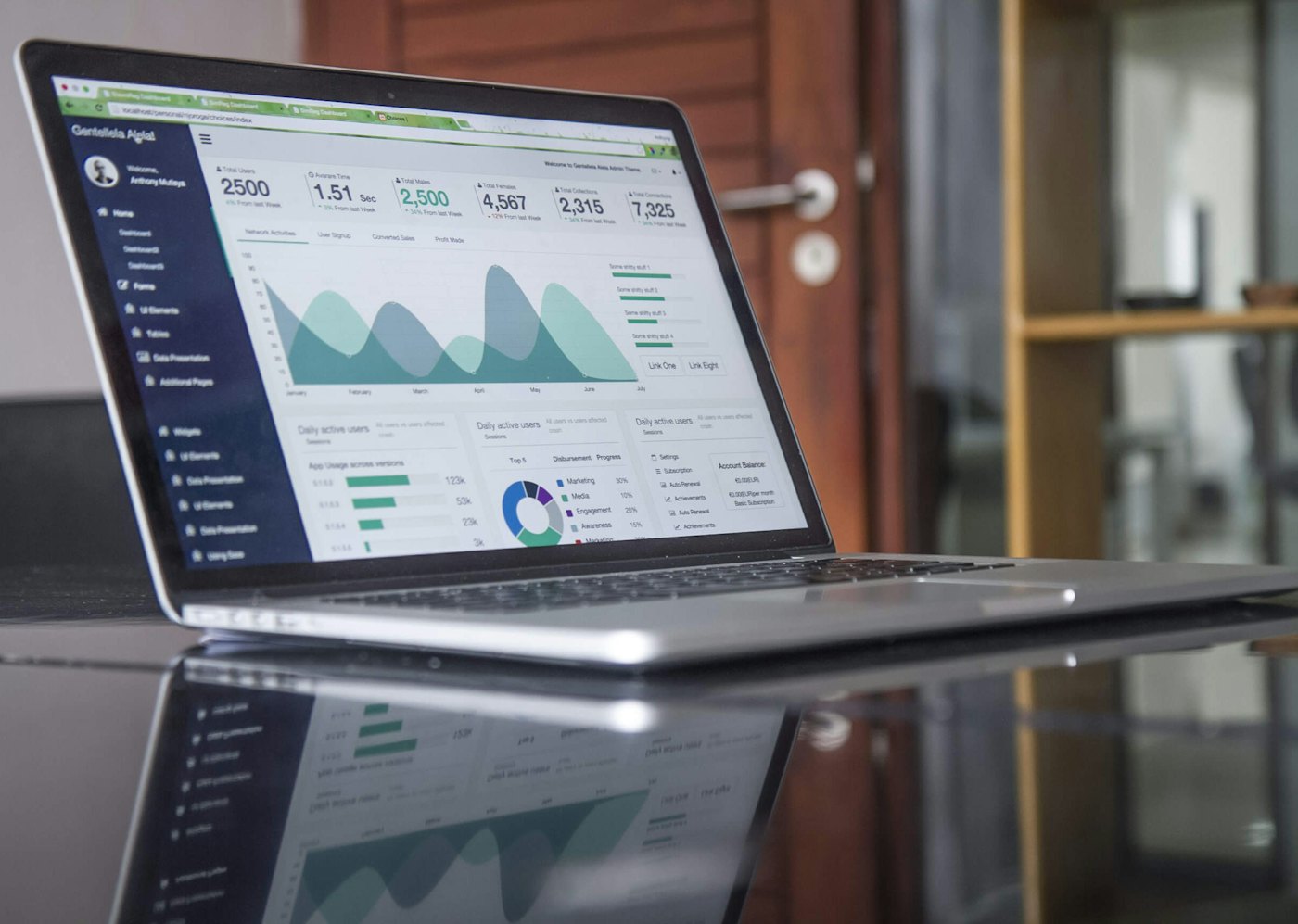
Every Friday, one page. Six numbers, the trend, and one decision. This is the report we send clients, and it is the report you should send yourself if you are running this solo.
| Metric | Target by day 90 | How to read it |
|---|---|---|
| Accounts in list | 300–500 | Fewer than 200 and you will run out of good-fit accounts before the message is proven. |
| Emails sent per week | 400–800 | Enough to compare variants. Below 150 a week you cannot call anything a test. |
| Reply rate (all replies) | 0.7–1.0% | Roughly double the 0.45% all-campaign average. Under 0.45% means list or message, not "the market". |
| Positive reply rate | ≥0.3% | The only number that funds meetings. Negative and "not now" replies are still useful signal. |
| Bounce / unsubscribe | <2% / <0.5% | Sits right on the 1.71% and 0.36% industry averages. Above it, fix sourcing before adding volume. |
| Meetings booked per month | 6–10 | From 300–500 accounts across three channels. This is the number your board actually cares about. |
What good actually looks like
It helps to know the yardstick before you judge your own numbers. These are the baselines we compare every new campaign against:
A campaign at 0.9% replies with 0.35% positive is a good campaign at day 60. A campaign at 3% replies but no meetings is a curiosity, not a pipeline. Judging outbound by replies alone is how teams end up optimising for people who enjoy saying no.
Run it yourself or hand it to us
This plan is deliberately executable by a founder with a laptop and two hours a week — we have watched founders run the first 60 days solo and do fine. What usually breaks is day 61 onward: adding channels means more tools, more copy, more list maintenance, and the Friday report quietly stops getting written.
Leadscope runs this motion as a service. We have closed $1.5M ARR from zero in 14 months selling B2B SaaS and IT into the U.S. market, we have run outbound for 10+ clients in our first six months, and our outbound workflow has delivered 3X SDR pipeline efficiency against the teams that inherited it. The assets — the list, the sequences, the report — stay with you either way.
Let's map your first 90 days
Thirty minutes on a call. We look at your ICP, your current outreach, and where your next customers are most likely to come from. You leave with a clear next step whether or not we work together.
Get the next playbook by email
One practical email a week on outbound, SDR teams and market entry. No spam, unsubscribe any time.